Monday, February 29, 2016

Curriculum Ideas...Self Portrait Semester

For this curriculum, I'd like to do a full semester of Self Portraits in all different mediums and I'd direct this class toward more of an Advanced/Honors Class at a High School level. I think I'd decide to do this class with a higher level of student because I would like to be able to introduce a multitude of different artists within the semester.

First Project: Blind Contour Portraits
Example Artists: Ian Sklarsky and Pablo Picasso


This project would be a great way to begin the semester because it would be a way to reintroduce the idea of blind contour drawings while allowing the students to be able to go back into them and work back into them with color. I would allow the students to pair up and draw their partner (and then switch and allow their partner to draw them). I would then have them switch partners to draw a few different people and get different looks and expressions for these drawings. These would be done using watercolor paper and sharpie markers. The students would be asked to choose their favorite 2-3 drawings and then work back into them with watercolors and markers and enhance the drawings to show off more of the person's personality.


Second Project: Looking Glass Portraits
Example Artists: Chitra Ganesh and Iain Macarthur
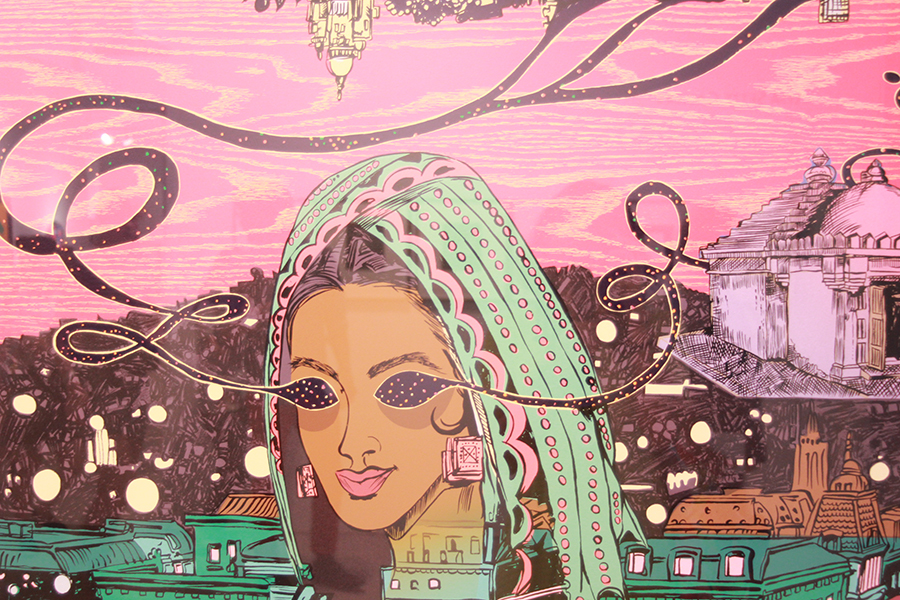
 

For this project, I would introduce the students to both Chitra and Iain as my inspirations. This would require students to create an alternate version of themselves where they could then decide what medium they wanted to use and how they were going to accurately represent this alternate self. Students would be given the option of starting with a photographic representation of themself and then hand drawing in the remaining details or they could completely start from scratch with their representations and paint them in a fantastical and cartoonish way. A lot of freedom can be given with this assignment for that reason and it would allow the students to show who they would like to see themselves represented as.


Project Three: Spirit Animal Sculptures
Artists: Oaxacan Tribe, Native American Tribes

 
For this project, I would introduce the students to the ideas of Spirit animals in Native American cultures as well as indigenous Mexican tribes. Within this, I would have the students decide which animal(s) represented themselves and then have they sculpt that animal/combination of animals out of clay. From there, I would have them research the inspirations behind the painting techniques/patterns/colors and decide how they wanted to finish off their piece while still connecting it back to the initial representation of their spirit animal.

Project Four: Selfless Self-Portraits 
Artist: Millee Tibbs


For this project, I would introduce basic camera knowledge to the students and explain that a self-portrait doesn't necessarily have to include an actual image of them inside it. I would use this to try and break the students out of the idea of self-portraiture being so rigid and I would have them begin thinking about all of the places that are really important to them and that would be the beginning of this project. Students would use these places (and ideally) photograph them in a way similar to Ansel Adams and completely remove the idea of a human presence within the image and, instead, allowing the landscape/location describe something about them.

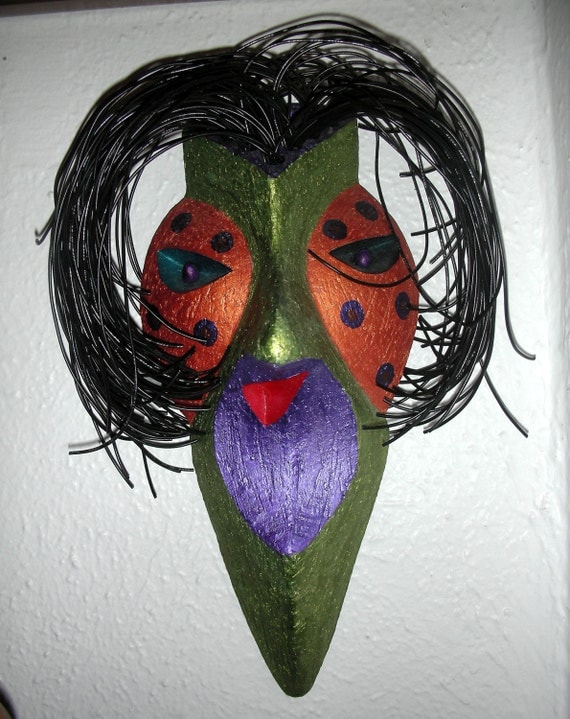
Project Five: Dream Masks
Artist: Jeff Zigulis


For this project, I
 would have the students choose between working with a slab of clay or working with paper mache and found objects to make their masks. The idea behind these masks is similar to that of a dream catcher, where it is something that is able to ward off bad dreams for everyone and especially children. These masks have a slightly comical feel to them and that helps them to seem less intimidating to young children, It would be beneficial to look into Mexican and African masks for inspiration for these masks as well.


Wednesday, February 17, 2016

The Perpetually Dreaded Still Life...

As someone who went through a BFA program and now I'm working on my Master's degree in Art Education, I think I can officially say that I always have and probably always will hate drawing still life images. I find them incredibly difficult since I'm not someone who specifically enjoys drawing...at all.

That being said, I fully believe that they need to be taught in order to help fine-tune compositional skills, dimension/spatial understanding, as well as the basic idea of how shadows actually interact with other objects around them. Especially when working with graphite, I think they're absolutely necessary to help students learn how to use the full range of pencils as well as the effect they have on the image. Using a patterned fabric that would be able to be seen through glass objects, like we did in class, was a good way for us to practice how glass can warp/distort the patterns and it forces you to pay really close attention to the way tones shift through the glass as well.

Going from experience, I can say that I believe students are going to have the most trouble getting their proportions accurate. That seems to be the biggest issue beginners face in any still life assignment. This can be combated simply by showing the students all of the little tips and tricks to correcting proportions and spatial issues. Especially with cylindrical objects, the idea of drawing ovals and then connecting them to make sure it's proportioned accurately could be a very useful tool for the students.


Monday, February 1, 2016

Gesture Drawings...Are they necessary?

YES. Yes yes yes. You have to know how to do gesture drawings, it's imperative to learning how to draw, especially when still life and figure drawing is involved.

Well, that was something I never thought I'd say... I'm not someone who really enjoys drawing, frankly, I can't stand it. But, that doesn't mean it's not a necessary evil when it comes to doing and teaching art.  I can honestly say that gesture drawings saved me during a lot of my undergraduate years. How?

Well, gestures are the perfect starting point and planning stage of a drawing. This is the point where you really stop and focus your energy on getting the major proportions and placements of objects correct. Why? If not, the entire image with be skewed in one way or another. Showing students how to do a quick sketch of their drawings, without adding in details (except for large shadowing), is incredibly useful when planning out the final work.  It's also an incredibly successful way to create quick sketches and thumbnail drawings of potential future drawings.

So yes, students might hate the initial idea of gesture drawings, I know I did. But, I firmly believe that they will come to appreciate and respect the gesture drawing in time.

Classroom Expectations and Safety Rules

Expectations and Safety rules are important in all classroom settings but even more so in an art room... If I were to create a set of rules for my classroom, they would be along the lines of this:


Art Room Expectations

Respect Each Other
Properly use materials, supplies, and tools AS DEMONSTRATED
Come in, get your materials, sit down, and be ready to work!
Clean up after yourself! There's no 'I' in TEAM...
Be Creative! Don't let anyone kill your creativity!


Art Room Safety Rules

Only use equipment AFTER being shown how to properly handle it!
If you have a question about how something works, ask!
No fixative/spray paint will be sprayed inside the room
Do NOT touch the hot kiln
Long hair and baggy clothing must be held back/secured while operating machinery 
(including the pottery wheel)
Wear safety goggles whenever applicable
Do not remove tools/equipment from the art room without permission from the teacher
Alert the teacher as soon as possible if there is an injury
Know where all the first aid kits/supplies are!

Monday, January 25, 2016

Contour Drawings

I remember doing contour drawings when I was 13 years old... my 8th grade art class made accordion books with all of our hands in them. We had to hold a ribbon in our hands and make sure it hit two certain points on our paper (so it connected with the hand next to ours in the book) and our hands were all drawn using contour line drawings. I remember being fascinated with following the lines around my hand with eyes and I couldn't believe how accurate the lines actually were. It was so much fun.

I feel like this is one of the easiest and one of the best introductory drawing projects that could be introduced to a beginning art class or it could be a daily exercise in an intermediate/advanced drawing class. I'd start out with hands and showing the class how to make their drawing by following every little angle with their eyes and translating that onto the paper. From there, I'd introduce them to the idea of doing this same process with portraits. I would then introduce them to Ian Sklarsky and his blind contour portrait drawings. I would use him as a reference for my students to show them that contour drawings, especially blind contour drawings are not meant to be perfect and, in fact, that is the beauty about them.  I'd then have them practice drawing a partner and then swap so that their partner could then practice their drawing skills with them. This would be a great warm up for more advanced classes. It would also be really interesting to try and introduce the students to using contour and blind contour drawings to create a still life where they then added watercolor or colored pencil accents into their final drawing.

Contour drawings are a great way for students to work on proportions and correct placements of features while still having fun and creating some interesting art work from them.

http://www.iansklarsky.com/work/


First Entry...Teaching Thoughts

https://blogger.googleusercontent.com/img/b/R29vZ2xl/AVvXsEjy-P3iHmKFxPtaoMID3SCTUF4A6DnzjtXhuV9xbxGGFlmf_YaCObf89UxX-JOYP1PKLgSu5TirEBCDV4ESHBvnrbYhIZl7nzi-sB1XZ5dgJlAJ1aCj8NYXrFgo0RNjJPprxO4LRId_kh7g/s1600/Screen+Shot+2014-03-20+at+12.51.11+PM.png
Soon, the moment will be here. I'll be in a school, teaching art to adolescent students and expecting them to like, respect, trust, and actually listen to me as their teacher and not their peer.  It's somewhat terrifying but at the same time, it's completely exhilarating and something I've been wanting for so long.

I often wonder if I'm going to be fully equipped to handle anything and everything that they're going to throw at me within my classroom... Will I be able to come up with relevant lesson plans that will continue to interest my students on a regular basis while still involving each and every student in an effective way? What if my lessons are found to be boring by my students? How do I keep them engaged everyday without losing my relevancy and respect as a teacher? So many questions...